

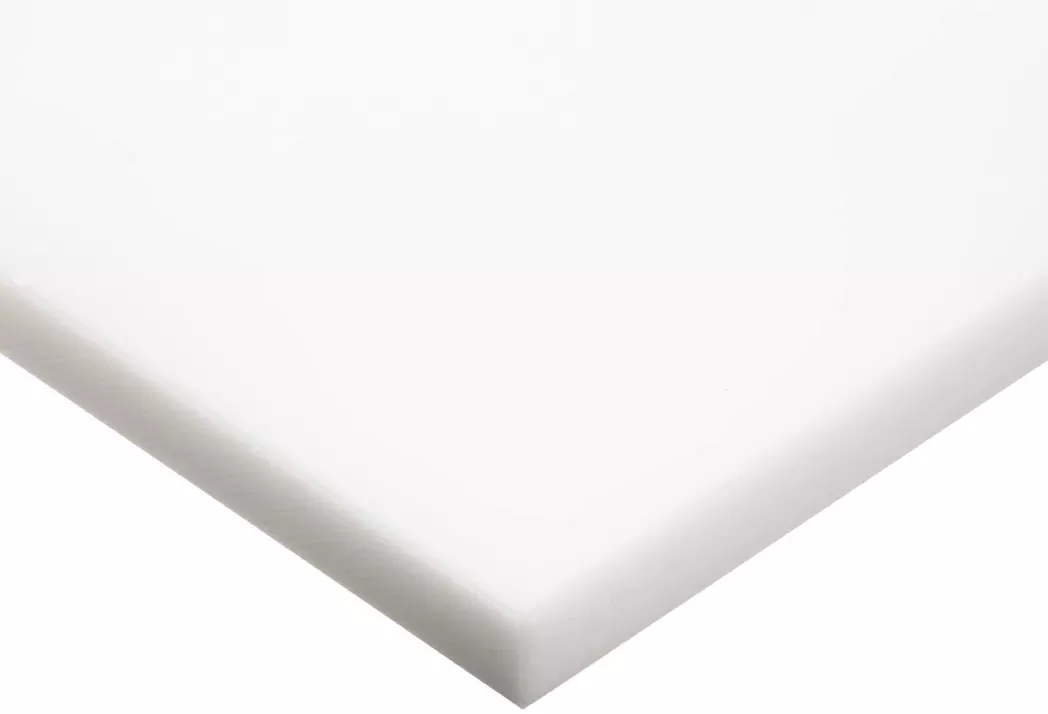
A food grade HDPE sheet is a rigid plastic panel made from virgin high-density polyethylene resin that meets FDA and international standards for direct food contact. Unlike standard HDPE, it contains no recycled content, no heavy metals, and no restricted additives — making it the go-to material for cutting boards, food processing equipment, and commercial kitchen surfaces. Zhihong Plastics supplies virgin PE100 food grade HDPE sheets in custom sizes and thicknesses, backed by full compliance documentation.
What Is Food Grade HDPE Sheet?
Food grade HDPE sheet is manufactured from 100% virgin (first-use) high-density polyethylene resin. “Virgin” means the resin has never been processed before — no recycled pellets, no regrind, and no unknown contaminants from previous use cycles.
Key compliance frameworks that govern food-contact HDPE include:
- FDA 21 CFR 177.1520 – U.S. regulation permitting polyethylene resins for food-contact articles
- EU 10/2011 – European Union migration testing standard for plastic food-contact materials
- USP Class VI – Biocompatibility standard relevant to pharmaceutical and food processing equipment
- NSF/ANSI 51 – Certification for plastic materials used in food equipment
Food grade HDPE sheet is typically natural (off-white) or white in color. It is odorless, non-porous, and resistant to bacteria, moisture, and most chemicals — properties that make it easy to clean and sanitize in demanding food environments.
Food Grade vs. Standard HDPE: Key Differences
Choosing the wrong grade is a compliance risk. The table below summarizes the main differences:
| Property | Food Grade HDPE | Standard HDPE |
|---|---|---|
| Resin source | 100% virgin | May contain recycled content |
| Additives | None / restricted | Colorants, fillers permitted |
| Color options | Natural / white only | Wide range |
| Compliance cert | Per-batch required | Not standard |
| Typical price | Higher | Lower |
The virgin-material premium is explained in our HDPE sheet cost comparison. For general applications where food contact is not required, our standard HDPE sheet is the economical base material.
FDA & Food-Contact Compliance Standards
When sourcing food-safe HDPE, buyers should verify the following documents from any supplier:
- FDA 21 CFR 177.1520(c) compliance letter – confirms the resin meets U.S. food-contact polyethylene requirements
- EU 10/2011 migration test report – required for food-contact articles sold into European markets
- Material Safety Data Sheet (MSDS/SDS) – confirms the absence of heavy metals and restricted substances
- Batch-level certificates of conformance – traceability from resin lot to finished sheet
Always request per-batch documentation, not a single blanket certificate. Resin sources can change between production runs, so batch-level traceability is the only reliable safeguard.
Food Grade HDPE Sheet Applications
Food grade HDPE sheet is widely used wherever plastic surfaces come into direct or indirect contact with food. Common applications include:
- HDPE cutting board sheet – the most common application; easy to sanitize, knife-friendly, and USDA/FDA accepted in commercial kitchens
- Food grade cutting board fabrication for butcher counters and food preparation stations
- Food processing equipment liners – guides, wear strips, and chute liners in meat, poultry, and dairy plants
- Commercial kitchen work surfaces and countertops
- Food storage bins, tanks, and tote liners
- Conveyor guide rails in packaging and bottling lines
For a broader view of how HDPE performs across industries, see high density polyethylene uses.
Sizes, Thickness & Grades
Standard sheet size is 4 × 8 ft (1,220 × 2,440 mm). Custom cut-to-size is available for most orders.
| Thickness | mm Equivalent | Typical Use |
|---|---|---|
| 1/4″ | 6 mm | Light-duty liners, guides |
| 1/2″ | 12.7 mm | Commercial cutting boards |
| 3/4″ | 19 mm | Heavy-duty work surfaces |
| 1″ | 25 mm | Industrial processing blocks |
To select the right gauge for your project, refer to the HDPE sheet thickness chart. For the highest compliance tier, our food grade PE100 sheet is specified with virgin PE100 resin, and our HDPE100 grade sheet is available for stricter food-grade applications.
How to Choose a Food Grade HDPE Sheet Supplier
When evaluating a food grade HDPE sheet supplier or manufacturer, use this checklist:
- Supplies 100% virgin resin (no recycled content)
- Provides FDA 21 CFR 177.1520 and EU 10/2011 documentation
- Issues batch-level certificates of conformance
- Offers cut-to-size and CNC machining services
- Has defined MOQ and lead time transparency
- Maintains full lot traceability from resin to finished sheet
Zhihong Plastics meets all of the above criteria and ships globally to food processors, kitchen equipment OEMs, and industrial distributors.
Frequently Asked Questions
1. Is HDPE sheet food grade safe?
Yes — virgin HDPE sheet complies with FDA 21 CFR 177.1520 for food-contact use. Always specify virgin resin and request compliance documentation.
2. What is the difference between food grade and regular HDPE sheet?
Food grade HDPE uses 100% virgin resin with no recycled content or restricted additives. It comes in natural or white only and includes per-batch compliance certificates, at a slightly higher price.
3. What thickness is used for food grade cutting boards?
Commercial cutting boards typically use 1/2″ (12.7 mm). The full range runs from 1/4″ to 1″ (6–25 mm) depending on application load.
4. Can food grade HDPE sheet be cut to size?
Yes. CNC cutting and machining are available, with clean edge finishing suitable for food-contact surfaces.
5. Is HDPE approved by the FDA for food contact?
Yes, under 21 CFR 177.1520(c). Always request a per-batch compliance letter from your supplier — a single blanket certificate is not sufficient.



